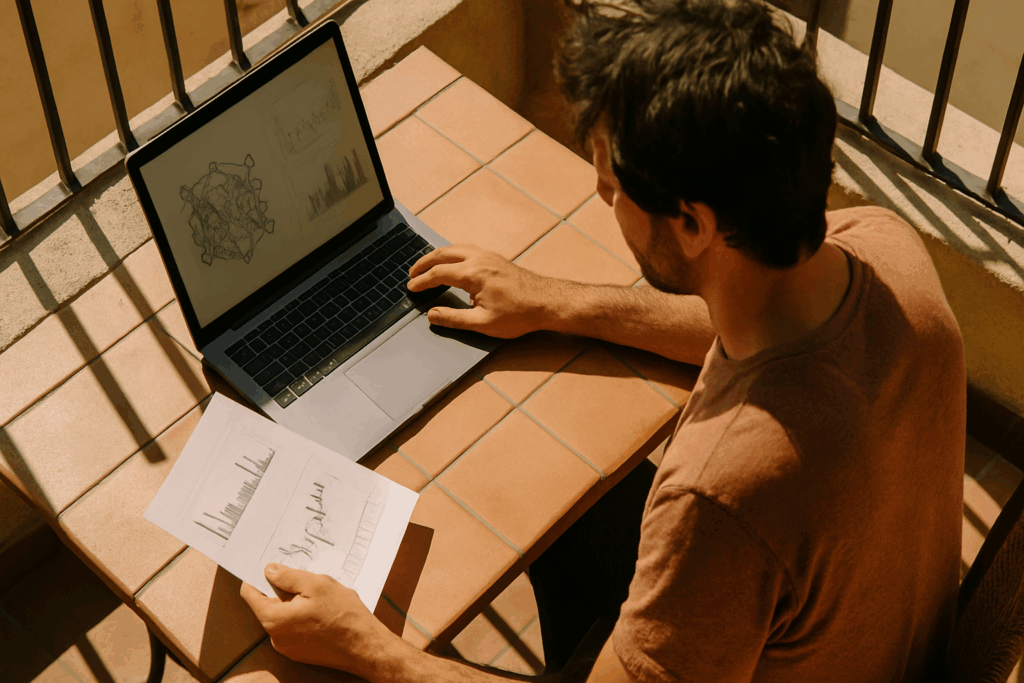
You’re staring at a blank artboard.
Again.
Your mood board is full of the same ten stock photos from 2017.
You’ve scrolled past three galleries already. All look identical, all feel hollow.
I’ve been there. More times than I care to count.
Most so-called inspiration tools either drown you in noise or hand you ideas that don’t fit your client, your timeline, your actual skill level.
I’ve tested over two dozen design idea sources.
Watched how real designers grab, twist, and ship work (not) just pin things to a board.
What works isn’t more images. It’s better signals. Fewer clicks.
Less guesswork.
This isn’t another gallery roundup. No fluff. No vague “tips.”
Just one tool.
One workflow. One way to get unstuck (fast.)
I’ll show you exactly how to use the Graphic Design Ideas Generator Gfxdigitational to find fresh, usable ideas (not) just pretty pictures.
No theory. No hype. Just what actually moves projects forward.
You’ll know by the end whether it fits your process.
Not someone else’s ideal.
Gfxdigitational Isn’t Just Another Image Bank
I opened Unsplash this morning searching for “minimalist logo inspiration.” Got 427 results. Half were coffee shop logos from 2016. One had a pineapple wearing sunglasses.
(Yes, really.)
Gfxdigitational doesn’t work like that.
It tags assets by how they’re built. Not just what they look like. SVG-ready.
Responsive typography examples. Dark mode UI patterns. That’s curation, not keyword stuffing.
You’re not guessing if something will hold up in production. You’re filtering for what works, right now, in your actual workflow.
Free banks dump you into decision fatigue. AI generators? They spit out visual noise (blurry) gradients, floating hands, weirdly symmetrical faces.
(Ask me how many times I’ve seen a logo with three identical circles and no hierarchy.)
Gfxdigitational skips the fluff. No watermarks. No “free for personal use only” fine print that vanishes when you pitch to a client.
Search the same phrase. “minimalist logo inspiration” (and) you get three clean, flexible concepts. All with source files. All tested across devices.
All ready to drop into Figma.
That’s the difference between browsing and building.
Graphic Design Ideas Generator Gfxdigitational is the only tool I trust when I need to ship fast. Without second-guessing licensing or pixel alignment.
Try it. Then go back to Dribbble and tell me you don’t feel exhausted.
You will.
How Gfxdigitational Actually Solves Design Problems
I used it to build an eco-friendly SaaS dashboard last month. Not just look at pretty pictures. Solve the brief.
First, I typed “eco-friendly SaaS dashboard” into the search bar. Then I clicked Adapt Mode. That’s where things got real.
It showed me the same layout in light mode, dark mode, and mobile view (side) by side. No guessing how spacing shifts. No squinting at tiny screenshots.
I saw exactly how the grid reflows. (Spoiler: the card stack becomes a single column at 375px. Obvious now.)
Then I picked one layout and hit “Annotate.” It auto-generated a PDF with spacing ratios, hover states marked, even contrast-checked text labels. You don’t reverse-engineer inspiration. You dissect it.
The built-in checklist prompts stopped me cold twice. “Does this solve your accessibility need?” Nope. I swapped out a teal-on-blue button before sending anything to dev.
Passive scrolling is a waste of time. Gfxdigitational forces you to answer questions before you save anything. Good.
I covered this topic over in What Are Graphic Design Jobs Gfxdigitational.
I export annotated PDFs straight to Figma. No copy-pasting hex codes. No misreading padding values.
Just clean, usable reference.
That’s why the Graphic Design Ideas Generator Gfxdigitational isn’t a mood board tool. It’s a decision engine.
You’re not browsing. You’re auditing.
And if your process doesn’t include checking contrast before handing off to dev (you’re) already behind.
Try Adapt Mode first. Not last.
Burnout Isn’t Inevitable (It’s) Avoidable

I used to wait for inspiration like it was a bus I could flag down.
Then I missed three deadlines in one month. My brain felt like static.
So I built a ritual: 10 minutes every morning, no exceptions.
I open the Graphic Design Ideas Generator Gfxdigitational and pick my current phase. Research, wireframing, or polishing. The feed changes.
Instantly.
No scrolling. No guilt. Just what I need, when I need it.
The Inspiration History log? That’s where things got real.
It showed me I saved 8 out of 10 items with asymmetrical balance. Not “interesting composition.” Not “cool layout.” Asymmetrical balance. Specific.
Useful.
You’ll see your own patterns too. And you’ll stop chasing what looks popular.
Algorithm feeds push viral work (often) from senior designers with teams and budgets. It’s not aspirational. It’s alienating.
Curated collections don’t do that. They match your skill level. Your goals.
Your actual work.
Here’s my pro tip: save exactly 3 assets per session. Not 5. Not 12.
Three.
Then write one sentence on how you’ll adapt each. Not “I like this.” Not “This is cool.” “Steal the card hover animation, but simplify the easing curve.”
That sentence forces intention. It turns passive looking into active learning.
What are graphic design jobs gfxdigitational? They’re not just about output. They’re about staying in rhythm without breaking yourself.
I’ve done this for 14 months straight.
My energy hasn’t dipped. My ideas haven’t dried up.
You don’t need more time. You need better input.
Beyond Screenshots: Client Feedback That Actually Moves Projects
I stopped sending screenshots years ago. They’re lazy. They’re vague.
They make clients guess what I’m trying to show them.
Gfxdigitational lets me build branded inspiration decks in minutes (straight) from saved items. No dragging into Canva. No mismatched fonts or blurry exports.
Just clean, on-brand slides with my logo and voice baked in.
The annotation layer is where it gets real. I write notes like “This shows how micro-interactions build trust”. Not “hover-triggered CSS transitions.” Clients aren’t developers.
Why speak like they are?
Side-by-side comparisons? Game changer. Two Gfxdigitational options next to each other kill the “I don’t like it” feedback dead.
Clients point. They pause. They say “I prefer the spacing here”.
And we move on.
The Figma plugin pulls color palettes and type scale references directly into active projects. No manual copying. No lost hex codes.
You want proof this works? Try it. Then go learn how to use it properly: this resource
Stop Scrolling. Start Designing.
I’ve been there. Staring at blank screens. Clicking through galleries that just make me feel worse.
You don’t need more inspiration. You need direction.
Graphic Design Ideas Generator Gfxdigitational doesn’t dump pretty pictures on you. It shows you how to use them.
That landing page conversion problem? Type it in right now. Save one asset.
Write your adaptation note. Even if it’s just “move CTA above fold.”
Most tools leave you stranded at “look what’s possible.” This one hands you the first real step.
You’re not behind. You’re not out of ideas.
Your best idea isn’t hidden. It’s waiting to be remixed.
Open Graphic Design Ideas Generator Gfxdigitational and do it.