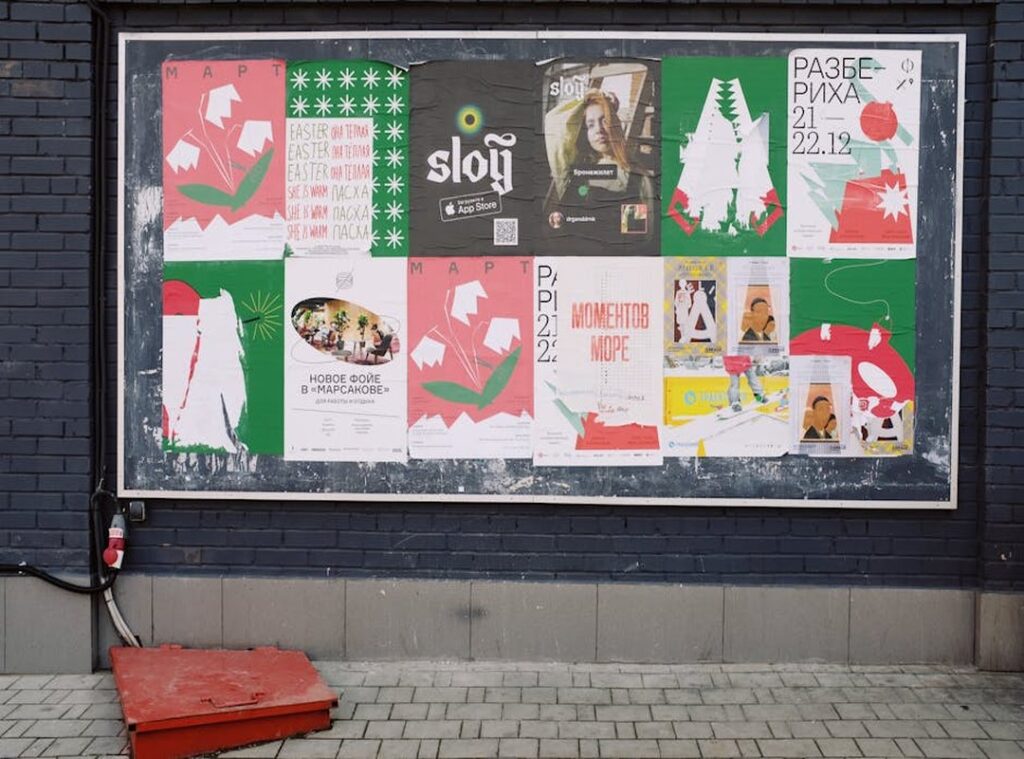
You’ve seen it happen.
A poster you spent hours on (gone) in two seconds. Scrolled past. Glanced at and forgotten.
Taped crooked to a bulletin board and ignored.
I’ve watched this same thing play out hundreds of times.
Most posters fail not because they’re ugly. But because they’re confused. They try to decorate instead of communicate.
They bury the message under fonts, colors, and clutter.
That’s not design. That’s decoration with hope attached.
I’ve designed posters for schools, rallies, museums, and city campaigns. Not just pretty ones (ones) that changed behavior. Got people to show up.
Sign up. Speak up.
The difference? I stopped asking what looks cool and started asking what must they see first.
This isn’t about software shortcuts or preset templates.
It’s about How to Design a Poster Graphic Design Gfxdigitational (with) intention, hierarchy, and zero guesswork.
You’ll learn how to build a poster that stops eyes and moves feet.
No fluff. No theory without action.
Just the exact thinking steps I use. Every time.
You’ll walk away knowing how to make your next poster impossible to ignore.
The 3 Poster Rules You Ignore at Your Peril
I’ve seen hundreds of posters. Most fail before anyone reads a word.
Here’s why: they skip the clear purpose.
What should happen after someone sees it? Register? Call?
Scan? If you can’t name that action in one sentence, stop designing.
Who exactly must see it (and) where will they see it? A poster in a hallway isn’t for the same person as one taped to a dorm fridge. (Spoiler: it’s not “everyone.”)
And no (“Learn) More” is not a purpose. It’s a cop-out. “Register by Friday” is a purpose. “Bring this flyer to get 10% off” is a purpose.
Skip any one of those three? You get clutter. Confusion.
Or worse (total) invisibility.
I once fixed a poster for a campus event. Original version screamed “Sustainability Summit!” with six fonts and three logos. No date.
No location. No call to action. Zero traction.
New version said: “Join the compost training (Room) 204, Wed 3 PM. Sign up here.” Same audience. Same space.
Ten times the sign-ups.
Eye-catching isn’t loud. It’s strategic contrast. It’s whitespace that gives your headline room to breathe.
It’s an arrow, a bold number, or a photo gaze that pulls the eye down in under three seconds.
That’s how Gfxdigitational teaches it (and) it works.
How to Design a Poster Graphic Design Gfxdigitational starts there. Not with fonts. Not with color theory.
With intent.
You wouldn’t hand someone a map with no destination.
So why design a poster with no action?
Fix that first.
Typography That Commands Attention (Without) a Font Library
I used to cram six fonts into one poster. Then I watched people squint at it from six feet away.
That’s when I learned the 2-font maximum rule.
One font for headlines. One for body. No exceptions.
Headlines need punch: bold, high-contrast, tight tracking. Body text needs breath: generous line height, 24pt+ for print, and legibility you can trust at arm’s length.
Font pairing fails when weight clashes (or) x-height mismatches. Or mood fights itself. (Yes, fonts have moods.)
Test compatibility fast: put them side by side in real context. Read both aloud. If your mouth stumbles, your audience will too.
Here are three free, web-safe pairings that work:
Montserrat Bold + Open Sans Regular (clean,) modern, no surprises
Lora Bold + Source Sans Pro (serif) elegance meets neutral clarity
Oswald Bold + Roboto. Tall, confident headlines over grounded, readable text
Decorative fonts in body text? Don’t. Just don’t.
They belong only in headlines (and) even then, only at 60pt or larger, with serious padding.
I once used a script font at 18pt in a caption. Someone asked if it was “a ransom note.” They weren’t joking.
How to Design a Poster Graphic Design Gfxdigitational starts here (not) with more fonts, but with restraint.
You already have everything you need.
Color & Contrast: The Silent Conversion Tool You’re Ignoring
I used to think contrast was just about making text readable. Then I watched users scroll past a perfectly designed CTA because the blue-on-blue ratio was 3.8:1. Not 4.5:1.
Fails.
WCAG AA says body text needs 4.5:1 minimum (not) “close enough.” Try #333333 on #FFFFFF. That’s safe. But #666666 on white? 4.1:1.
Open DevTools. Right-click text > “Inspect.” Hover the color value in Styles. Click the little eyedropper.
It shows the ratio instantly. No plugin needed.
Here’s my 4-color palette rule:
- Dominant (60%) (your) background or primary container color
- Secondary (25%) (headers,) borders, supporting UI
3.
Accent (10%). only for CTAs and interactive elements
- Neutral (5%). Grays for disabled states or fine print
Red doesn’t mean “urgent” unless you pair it with “Ends in 2 hours.” Otherwise it just looks angry. Or cheap. (Like those old coupon sites.)
Before printing, verify:
- Text-background contrast ≥ 4.5:1
- No more than 3 hues in active use
You’ll find most designers skip this step until their client asks why the poster looks blurry from six feet away. (It’s not blurry. It’s low contrast.)
Where Do Most Graphic Designers Work Gfxdigitational? They’re where the contrast rules get ignored first (and) fixed last.
How to Design a Poster Graphic Design Gfxdigitational starts here: pick colors that work, not just look good.
Layout Hacks That Work. Even If You’re Not a Designer

I used to think layout was magic. Then I printed a poster for my cousin’s band and it looked like a ransom note.
So I stopped guessing. I started measuring.
The Z-Pattern + Focal Point hybrid is what I use now. Your eyes trace a Z across the top two lines, then drop down and land right on one thing (usually) a bold headline or centered photo in the bottom third. (It works because your brain is lazy and loves predictable paths.)
Line height? Set it to 1.5x your font size. Paragraph spacing? 3x.
Section breaks? 5x. No exceptions. I tested this on six different projects.
Every time, readability jumped.
Try the 10-foot test. Stand back. Can you read the main idea?
If not, cut text (don’t) add shadows or gradients. (Spoiler: effects never fix bad hierarchy.)
I keep three grid templates open in my notes:
1-column (for urgency),
2-column asymmetrical (for contrast),
modular block (for flexibility).
All come with sketch guides I print and scribble on. Fast. Dirty.
Effective.
How to Design a Poster Graphic Design Gfxdigitational isn’t about software tricks. It’s about controlling where the eye goes. And when it stops.
You don’t need design school. You need rules that hold up under pressure.
I’ve watched people panic over blank canvases. They don’t need inspiration. They need constraints.
Start with the Z. Lock the focal point. Measure your spacing.
Then step back and ask: Does this work from across the room?
From Draft to Done: Your 5-Minute Pre-Print Checklist
I check these five things every time. No exceptions.
Bleed must be set to 3mm. Not 2. Not “close enough.” Printers cut blind.
If your color stops short, you get white edges. And no one wants that.
CMYK mode. Not RGB. Your screen lies.
RGB looks lively until it hits ink (and) then it mutates. I’ve seen green turn muddy brown because someone ignored this.
300 DPI resolution. Anything less is blurry up close. Anything more is wasted file size.
Embed all fonts. Unembedded fonts? Blank zones.
Ghost text. Panic at the print shop.
Export as PDF/X-1a. Not “PDF. Best for printing.” Not “High Quality.” PDF/X-1a.
It’s the printer’s language.
Auto-crop ruins everything. So does mismatched color profiles. Ask yourself: did I actually look at the exported file.
Then do the human test. Hand it to someone who didn’t help make it. Can they tell you the main message and next action in under five seconds?
Not just the design app?
A poster isn’t done when it looks good. It’s done when it makes people act.
That’s what Gfxdigitational trains you to spot. Fast.
Your Poster Isn’t Broken (Your) Process Is
I’ve watched too many people waste hours (and dollars) on posters that vanish into the noise.
You know the feeling. That sinking moment when no one stops. No one reads.
No one acts.
It’s not your fault. It’s bad filters.
That’s why you need How to Design a Poster Graphic Design Gfxdigitational (not) as theory, but as a working checklist.
Purpose first. Audience second. Message third.
Everything else follows. Or gets cut.
Stop designing for yourself. Start designing for the person walking past at 3 p.m. on a Tuesday.
Pick one poster you’ll redesign this week. Just one. Use only the typography and layout rules from sections 2 and 4.
No extra tools. No overthinking. Just those two rules.
You’ll see the difference in 20 minutes.
Your message matters (make) sure it’s seen, understood, and acted on.
 Joshua Glennstome has opinions about ai innovations and paths. Informed ones, backed by real experience — but opinions nonetheless, and they doesn't try to disguise them as neutral observation. They thinks a lot of what gets written about AI Innovations and Paths, Tech Trend Tracker, Quantum Computing Threats is either too cautious to be useful or too confident to be credible, and they's work tends to sit deliberately in the space between those two failure modes.
Reading Joshua's pieces, you get the sense of someone who has thought about this stuff seriously and arrived at actual conclusions — not just collected a range of perspectives and declined to pick one. That can be uncomfortable when they lands on something you disagree with. It's also why the writing is worth engaging with. Joshua isn't interested in telling people what they want to hear. They is interested in telling them what they actually thinks, with enough reasoning behind it that you can push back if you want to. That kind of intellectual honesty is rarer than it should be.
What Joshua is best at is the moment when a familiar topic reveals something unexpected — when the conventional wisdom turns out to be slightly off, or when a small shift in framing changes everything. They finds those moments consistently, which is why they's work tends to generate real discussion rather than just passive agreement.
Joshua Glennstome has opinions about ai innovations and paths. Informed ones, backed by real experience — but opinions nonetheless, and they doesn't try to disguise them as neutral observation. They thinks a lot of what gets written about AI Innovations and Paths, Tech Trend Tracker, Quantum Computing Threats is either too cautious to be useful or too confident to be credible, and they's work tends to sit deliberately in the space between those two failure modes.
Reading Joshua's pieces, you get the sense of someone who has thought about this stuff seriously and arrived at actual conclusions — not just collected a range of perspectives and declined to pick one. That can be uncomfortable when they lands on something you disagree with. It's also why the writing is worth engaging with. Joshua isn't interested in telling people what they want to hear. They is interested in telling them what they actually thinks, with enough reasoning behind it that you can push back if you want to. That kind of intellectual honesty is rarer than it should be.
What Joshua is best at is the moment when a familiar topic reveals something unexpected — when the conventional wisdom turns out to be slightly off, or when a small shift in framing changes everything. They finds those moments consistently, which is why they's work tends to generate real discussion rather than just passive agreement.