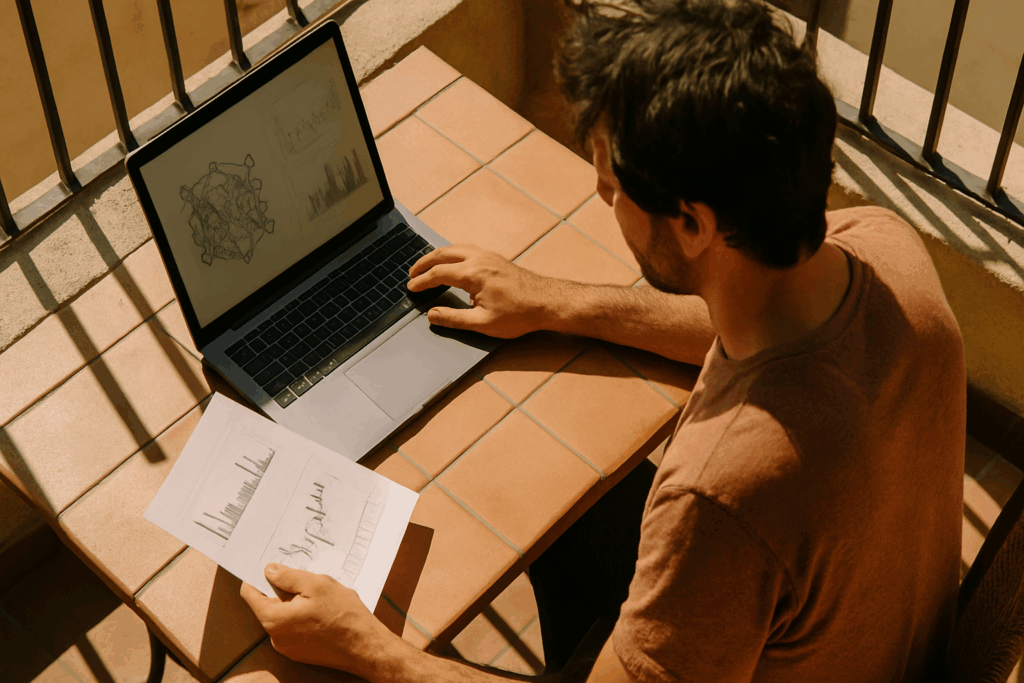
You stared at that blank canvas.
Felt the same panic I did the first time.
Expensive courses. Confusing tutorials. Tools that demand credit cards before you even draw a line.
I’ve been there. And I’m tired of pretending it’s normal.
This is not another list of “free trials” that turn into subscriptions. No upsells. No bait-and-switch.
Just real How to Learn Graphic Design for Free Gfxdigitational (tested,) used, and proven.
I’ve spent at least 10 hours on every tool and course in this guide. Built real projects with them. Hit real bugs.
Fixed them.
Some are perfect for total beginners.
Others pull self-taught designers out of ruts they didn’t know they were stuck in.
This isn’t for people chasing certificates or bootcamps.
It’s for people who want to make things (now.)
You’ll get exactly what works. Nothing more. Nothing less.
And yes. Every resource here is truly free. No hidden catches.
No fine print.
Let’s start designing.
Free Graphic Design Courses That Don’t Waste Your Time
I tried all three. So you don’t have to guess.
Gfxdigitational helped me spot which free courses actually build skill (and) which just look good on a resume.
Google’s UX Design Certificate (audit mode) covers color theory, typography hierarchy, and grid systems (but) only in service of UI flows. It’s great if you want to design apps. Not so much if you’re after poster layouts or branding work.
Canva Design School is visual-first. You drag, you drop, you see results fast. Their color theory module uses real Canva templates.
Not abstract swatches. But skip the exercises? You’ll forget everything by Tuesday.
Alison’s Diploma in Graphic Design has weekly quizzes and peer feedback. It forces you to do the work. Realistic time commitment: 6 hours/week for 12 weeks.
Miss two weeks? You’ll fall behind hard.
Here’s what no one tells you: skipping peer forums kills progress. I did it. Regretted it.
Feedback isn’t optional (it’s) where your eye gets trained.
How to Learn Graphic Design for Free Gfxdigitational starts here. Not with tools, but with seeing.
You need structure and practice. Not one or the other.
Pick the course that matches how you learn. Then stick to the schedule.
No shortcuts. Just work.
Free Design Tools That Actually Work
I started with zero budget and a laptop from 2013. No subscriptions. No trials.
Just real work.
Figma Community files? I built my first portfolio using free UI kits. No login required.
Photopea saved me when I needed layer masks fast and couldn’t install Photoshop. Inkscape handles SVGs better than half the paid tools I’ve tried. Gravit Designer?
Gone now (RIP), but its open-source cousin, Boxy SVG, does the same job today.
Here’s what I made in under two hours:
- A responsive portfolio landing page (Figma + Google Fonts)
- A social media banner set (Photopea + Unsplash)
Exporting from free tools trips everyone up. Save as PNG-24 in Photopea. Export as SVG in Inkscape.
Not “save as.”
Unsplash and Pexels are clean. Open Peeps has zero watermarks and works in Figma or Inkscape.
Pro tip: In Figma, Ctrl+Alt+Shift+K toggles constraints. Saves you ten minutes per frame. In Photopea, Alt+Backspace fills with foreground color.
Muscle memory beats menus every time.
You don’t need money to learn design. You need focus. And the right shortcuts.
That’s how I learned graphic design. The hard way, the free way, the How to Learn Graphic Design for Free Gfxdigitational way.
Community & Feedback. Where Free Learning Becomes Real Growth
I used to post my designs and wait for “nice job!” comments.
Then I realized that wasn’t helping me get better.
You need real feedback. Not cheerleading.
Here are three beginner-friendly free communities:
- r/graphic_design on Reddit (post) with a clear title like “Feedback on logo for local bakery”
- Figma Community Discord. Join the #critique channel, not the general one
3.
Design Buddies Slack. Apply via their website (they vet lightly, but it’s free)
The 2+2 rule fixes everything. Post your work with two specific questions (“Does the hierarchy guide the eye left-to-right?” or “Is the type legible at 12px?”). Then give two pieces of thoughtful feedback to someone else before you ask for any.
This builds credibility fast. People notice who shows up ready to help.
Free critique formats? Try weekly Zoom hangouts (Design Critique Club), async Loom swaps (record your screen + voice), or Dribbble comment templates (use “I noticed… I wonder… Have you tried…?”).
Avoid vague praise. Avoid toxic nitpicking. If someone says “this sucks” with no reasoning (mute) them.
And if you’re stuck for ideas? The Graphic Design Ideas Generator Gfxdigitational helps break creative blocks.
How to Learn Graphic Design for Free Gfxdigitational starts here (not) with tutorials. With people.
Feedback is oxygen.
Don’t hold your breath.
Free Design Resources That Actually Work
I download these five things and keep them open on my second monitor.
The Non-Designer’s Design Book PDF is the first thing I hand to anyone asking How to Learn Graphic Design for Free Gfxdigitational. Peachpit shares it legally. Read Chapter 2.
Then close it and sketch the CRAP principles by hand. Contrast, repetition, alignment, proximity.
Adobe Color CC cheat sheet? I pin it in Chrome. Use it while picking colors.
Not after. Try three combos before committing. (Yes, even for a button.)
FontPair’s guide lives in my bookmarks bar. Open it when you’re stuck on headlines. Test three pairings.
Delete the weak ones immediately.
No fluff. Just what works.
Awwwards’ UI pattern library? I screenshot patterns I like. Drop them into a Notion swipe file using their free template.
InVision’s Design Systems Handbook is dense. So I read one section, then recreate the diagram in Figma (from) memory.
Accessibility? Only InVision’s handbook has screen-reader. Friendly PDFs.
The rest? Print them. Annotate.
Highlight contrast ratios with a yellow pen.
You’ll learn faster if you do instead of just scroll.
Try that today.
Avoiding the Free Trap. What “Free” Really Costs
I used to chase free design resources like they were coupons. They’re not.
Outdated Figma tutorials from 2019? They teach workflows that don’t exist anymore. SEO blogs with dead links?
You’ll waste 20 minutes hunting a download that vanished in 2021. YouTube videos that show the first two steps. Then demand a $15/month sub for the rest?
That’s bait, not teaching.
Here’s my 4-point checklist before clicking anything:
Is the last update date visible? Does it require sign-up to view core content? Are examples built with current software versions?
Is source file access included?
If more than one is “no,” walk away.
I compared two free color theory guides last week. One just listed hex codes. The other showed how CMYK shifts wreck print mockups.
And included a real InDesign file you could open and tweak.
That second one saved me three hours on a client proof.
Time is the only currency that doesn’t reload. Track your hours vs. usable skills gained. I use a free Notion tracker template.
Log weekly, or you’ll forget what actually stuck.
I wrote more about this in Where Do Most.
You want real skill, not filler.
That’s why “How to Learn Graphic Design for Free Gfxdigitational” fails most people (it) skips the cost of time misallocation.
Your First Real Design Starts Now
I’ve seen too many people stall at “I’ll start tomorrow.”
You don’t need more tutorials. You don’t need permission.
You need to do something. And do it today.
That’s why How to Learn Graphic Design for Free Gfxdigitational isn’t about watching or saving links.
It’s about clicking, dragging, messing up, fixing it, and shipping one thing.
Pick one free tool. Pick one free project from section 2. Finish it in under 90 minutes.
Then post it where real designers see it. Section 3 has those places.
No gatekeepers. No paywall. No waiting for “the right time.”
Your first real design isn’t waiting for permission (it’s) waiting for your cursor to click.